Choose by the task customers need to finish
Choose a bot for a short, focused exchange. Consider a Mini App when customers need to compare options or edit several details together. If people must book without Telegram, include a standalone web route in the decision.
A bot supports messages, commands and buttons; a Mini App adds a web interface inside Telegram. Either interface still needs the business logic and integrations required by your service. See Telegram’s bot features and Mini App documentation.
The worked example below turns that distinction into a scope decision. It is a hypothetical equipment-rental business, not a customer case or a tested usability result. Treat the recommendations as hypotheses to check with your customers.
Example: a customer wants to reserve equipment
Imagine a rental business offering cameras, microphones and lighting kits. Customers choose equipment, enter pickup and return dates, review the request and receive a booking reference. Staff handle questions and exceptions.
First decide what “reserved” means. In this example, the initial release creates a booking request; staff confirm availability. The customer sees “pending confirmation” until that happens. Instant stock reservation and online payment are separate scope decisions.
The key fork is whether customers arrive knowing the kit they want. A repeat customer requesting one known kit has a different task from someone comparing several cameras and accessories.
A decision matrix for that same booking journey
Read each row as a requirement to investigate, rather than a feature every rental business should build. Select only the rows that belong in your first release.
| Customer task | Starting choice | What to specify |
|---|---|---|
| Request one known kit for fixed dates | Bot | Collect kit, dates and quantity; show an editable summary before submission. |
| Compare kits and filter suitable options | Mini App | Present comparable attributes and explain whether availability is live or staff-confirmed. |
| Change several items or quantities | Mini App | Keep the whole request visible and recalculate its summary after edits. |
| Check a submitted request or ask for help | Bot | Retrieve the correct booking and route exceptions to staff. |
| Browse and book without a Telegram account | Standalone web app | Provide browser access and a separate authentication or guest-booking decision. |
| Compare in a screen, then receive chat updates | Mini App plus bot | Use one booking record and define messaging permissions and return navigation. |
Turn the matrix into a first-release choice
If the first audience is repeat customers who already use Telegram and know their kit, prototype the bot path first. Ask them to change a date, correct a quantity and recover from an unavailable item. Frequent confusion or backtracking is a reason to test a screen-based version.
If comparison is central, prototype a Mini App catalog and request summary. Telegram documents menu-button and direct-link launch options, with different available context and permissions. Choose the entry route deliberately. Telegram Mini App launch options.
For customers arriving from public search, email links or referrals outside Telegram, test the browser journey separately. Do not require an account in another service merely because the internal team prefers that channel. A Telegram interface can be an additional route rather than the only entrance.
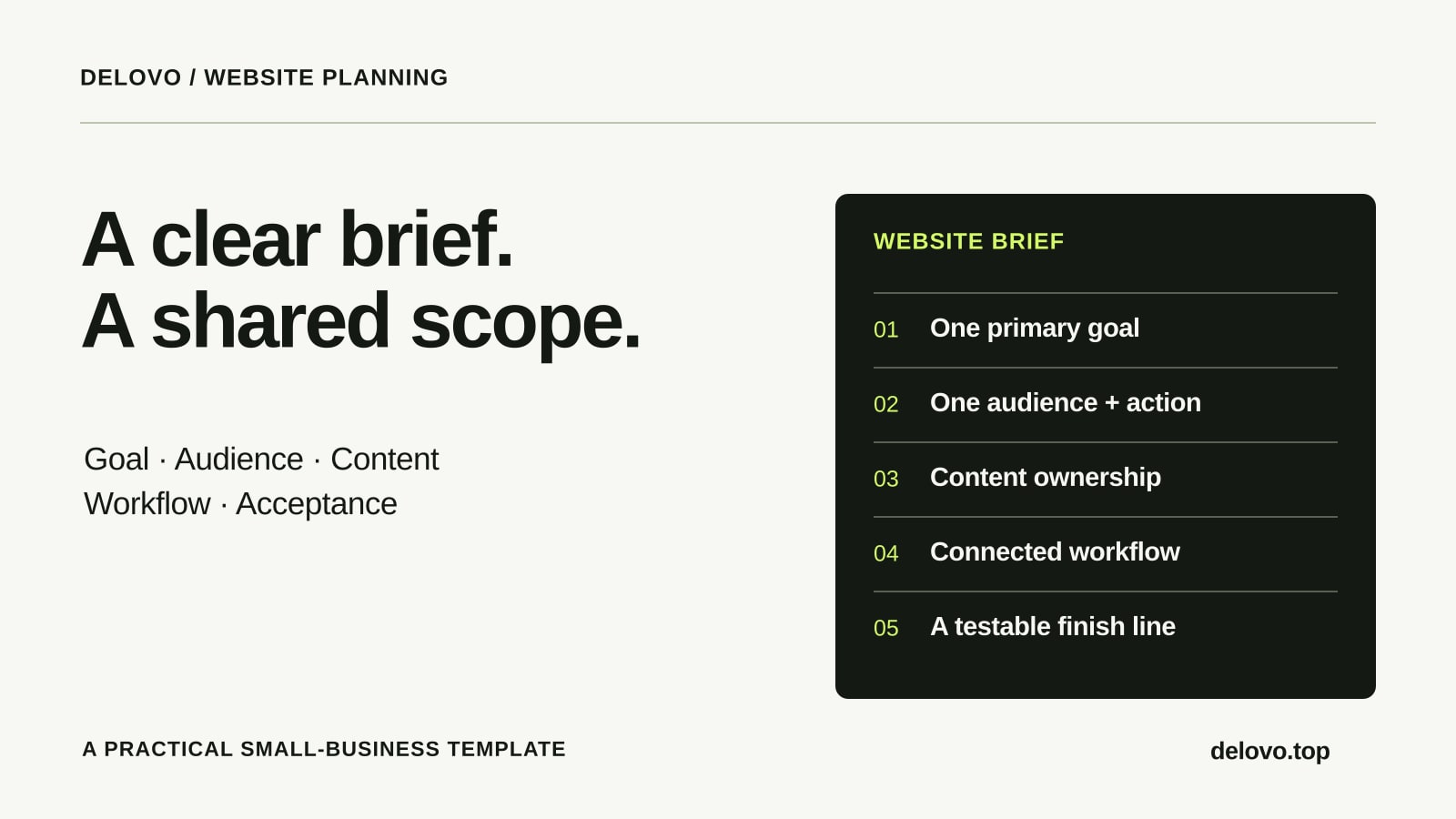
Copy this checklist into your project brief
Complete these fields before asking for a detailed estimate. Mark unknown answers as open decisions so suppliers can quote the same scope.
- Audience and entry: [repeat customers / new customers / both]; they arrive through [channels]; non-Telegram access is [required / optional].
- Booking fields: [kit ID, quantity, pickup date, return date, contact route]; optional fields are [list].
- Business meaning: submission creates [request / reserved stock]; confirmation comes from [system / staff role].
- Source of truth: equipment and availability live in [system]; access and API documentation are owned by [role].
- Customer actions: users may [create, view, edit, cancel]; edits close at [defined point].
- Exceptions: unavailable items, conflicting dates and failed submissions go to [queue and owner].
- Release boundary: include [one complete journey]; defer [payments, loyalty, additional locations or other features].
- Acceptance and support: agree [test cases and supported devices]; [role] owns hosting, access, monitoring and recovery.
Agree on observable failure tests
These example checks make the brief reviewable. They are proposed acceptance criteria, not test results or a guarantee that every business should use the same rules.
| Test to run | Expected result |
|---|---|
| Submit the same request twice after a slow response | Exactly one booking request exists; both attempts resolve to that reference. |
| Choose a return date before pickup | Submission is blocked; the customer can correct the date without re-entering the kit. |
| Open another customer’s booking reference | No booking details are disclosed; staff access follows a separate authorized route. |
| Make the inventory connection unavailable | No confirmed availability is claimed; the request is clearly pending or handed to staff. |
| Change the quantity on the review step | The stored request matches the final displayed quantity and dates. |
| Close and reopen the unfinished journey | The agreed save-or-restart behavior occurs, with no accidental submitted booking. |
Check platform constraints and operating costs
A standard bot cannot begin a conversation with someone who has never interacted with it. Plan how customers enter the service and what updates they expect to receive. Telegram bot behavior.
Mini App initialization data must be validated on the server before being trusted. That check establishes the Telegram data’s validity; your application must still decide which booking the person may access. Telegram validation requirements.
If payment enters scope, distinguish the physical rental from digital products. Telegram requires Stars for digital goods and services sold inside its apps, while physical goods and services have a different payment path. Recheck the rules for the intended checkout. Telegram payment requirements.
Ask estimates to separate interface work, inventory integration, staff tools, testing and ongoing support. A small chat interface can conceal substantial backend work. Include account ownership, backups and an access handover in the scope; compare the whole service rather than the number of screens.
Bring the completed worksheet to Delovo
Send Delovo your brief with the selected matrix rows, completed checklist and required failure tests. Those details make a bot, Mini App or web-app proposal easier to compare and keep the first release focused.
Sources and further reading
- Telegram bot features
- Telegram Mini Apps documentation
- Telegram bot behavior and access
- Telegram payments for digital goods and services
Platform features can change. Check the linked official documentation when planning your project.